Changes gump compilation to use string interpolation. .NET 6 uses code generation and compile time tricks to speed up string interpolation between 15 and 30% and reduce allocations dramatically.
- [X] Removes static freezing/unfreezing. Use other tools for this.
- [X] Cleans up IPoint3D allocations
- [X] Removes IPoint3D constructors since the compiler may not optimize the constructor path and allow allocations.


Note: Instead of `new Point3D(m)`, do something like `new Point3D(m.Location)`. Sorry for the inconvenience. In the long run this will prevent abuse of hot paths that will cause performance issues.
- [X] Removes several `ToList()` uses with `PooledRefQueue`
- [X] Adds a `PeekRandom` to PooledRefQueue
- [X] Updates EV/BS so they dispel each other in a more efficient manner.
- [X] Fixes Firebomb so it works like a normal firefield.
- [X] Fixes field spells so they aren't unnecessarily using a Point3D ref more than necessary.
- [X] Removes extra allocation in campfire by using reverse loop.
- [X] Removes other LINQ calls that aren't needed.
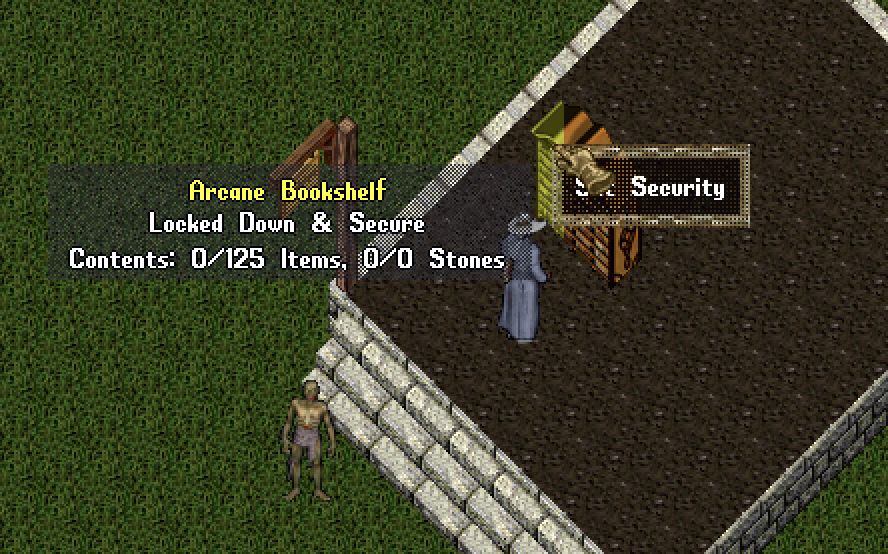
* Fixes tooltip for container furniture so it works. This doesn't work on ClassicUO.
* Fixes double click opening container furniture by double clicking the addon component.
* Fixes the context menu not showing up sometimes on the addon piece.

Note: You cannot drop anything into the addon component since it might be far away and it is not a real container. There is no easy fix for this without building an entire custom container class for addons or changing how items drag/drop entirely. Requires closing/opening container gumps as it switches from one component to another that shares the same content. Also requires sharing tooltips, invalidated properties, process delta changes, etc.
Not worth the effort.

<img width="444" alt="Screen_Shot_2021-09-12_at_4 27 28_PM" src="https://user-images.githubusercontent.com/3953314/133011752-c5b54cf2-2c7b-45c0-882d-0365ef62e686.png">
* Removes BodyValue
* Removes BodyPicker gump
* Fixes setting Body and BodyMod in props gump
* Props will now look for an `implicit cast` in order to find a way to allow you to modify values with the props gump.
* Fixed `[self set body 0x190` so it works too.
### Changes/Fixes:
* Adds timer pooling.
* Allows pool to be configurable in ModernUO.json
* Pool replenishes itself asynchronously if depleted.
* Fixes an issue with barkeeps and town criers
* Fixes an issue with incognito buff icons not being removed
* Fixes an issue with polymorph name mod not being removed
* Fixes several places where timers go on forever even after an object is deleted, keeping a reference (memory leak)
* Eliminates the timer for MiningCart altogether.
* Deletes `AcidSlime` since it is a duplicate of `PoolOfAcid`
* Fixes HonorableExecution and standardizes the code for other Bushido moves.

## Changes to the Timer API:
```cs
public class Timer
{
  // Creates a timer that will be returned to the pool once execution stops.
  public static void StartTimer(Action callback);
  public static void StartTimer(TimeSpan delay, Action callback);
  public static void StartTimer(TimeSpan delay, TimeSpan interval, Action callback);
  public static void StartTimer(TimeSpan interval, int count, Action callback);
  public static void StartTimer(TimeSpan delay, TimeSpan interval, int count, Action callback);

  // Creates a timer and returns a token for more control. Requires manual cancellation in order for the timer to be returned to the pool.
  // If the token is dereferenced, the timer will be dereferenced too. While not returning a timer to the pool is not considered hazardous, it does defeat the purpose of pooled timers.
  public static void StartTimer(Action callback, out TimerExecutionToken token);
  public static void StartTimer(TimeSpan delay, Action callback, out TimerExecutionToken token);
  public static void StartTimer(TimeSpan delay, TimeSpan interval, Action callback, out TimerExecutionToken token);
  public static void StartTimer(TimeSpan interval, int count, Action callback, out TimerExecutionToken token);
  public static void StartTimer(TimeSpan delay, TimeSpan interval, int count, Action callback, out TimerExecutionToken token);

  // If you aren't sure how to use the API above, or you don't care about performance, then you can use the old RunUO Timer.DelayCall
  public static DelayCallTimer DelayCall(Action callback);
  public static DelayCallTimer DelayCall(TimeSpan delay, Action callback);
  public static DelayCallTimer DelayCall(TimeSpan delay, TimeSpan interval, Action callback);
  public static DelayCallTimer DelayCall(TimeSpan interval, int count, Action callback);
  public static DelayCallTimer DelayCall(TimeSpan delay, TimeSpan interval, int count, Action callback);
}

public struct TimerExecutionToken
{
  public bool Running { get; }
  public int Index { get; }
  public int RemainingCount { get; }
  public DateTime Next { get; }
}
```

## When to use `TimerExecutionToken`?
Use tokens when you want to gain the performance benefit of using a pooled timer, but you need one of the following:
* Access to the next time the timer will tick:`token.Next`
* Access to which interval, how many intervals there are, or how many are remaining: `token.Index`, `token.Count`, and `token.RemainingCount`
* Stop a timer manually.
* Determine if the timer is running: `timer.Running`
* See notes below about requirements for using tokens!

## Notes about using the TimerExecutionToken:
When you opt-in to receive a token, you must call `Cancel()` to return the timer. This can be done inside of the callback, or outside of the callback at any time.
If this is not called and your timer is an infinite interval, then you will create a potential memory leak, or null pointer exception in your callback.
If the timer ends and is stopped, but cancel is not called, then the timer will never return to the pool and stay referenced until the token is deleted or cancel is called. (Memory leak)

## Is this thread safe?
No. The ModernUO timer system is not thread safe at all. If you require a thread safe timer system, contact me and I'll help adapt this system. Keep in mind that there is a massive performance hit to make this thread safe when there are literally no use cases for it.

If you need to synchronize execution, meaning you want to execute code from another thread on the core thread. Let's say you have a discord bot that is pushing commands to the game server. Then use `EventLoopContext.Post(SendOrPostCallback callback, object state);`.
- [X] Fixes TimeSpan not working with codegen
- [X] Fixes bad check for generic classes with a serialize method and deserialize ctor
- [X] Moves Accounts to codegen so it is versioned
- [X] Fixes deserialization of old Accounts with no version variable.
- [X] Fixes deserialize seek not doing anything. 🙈
- [X] Adds Email to serialization
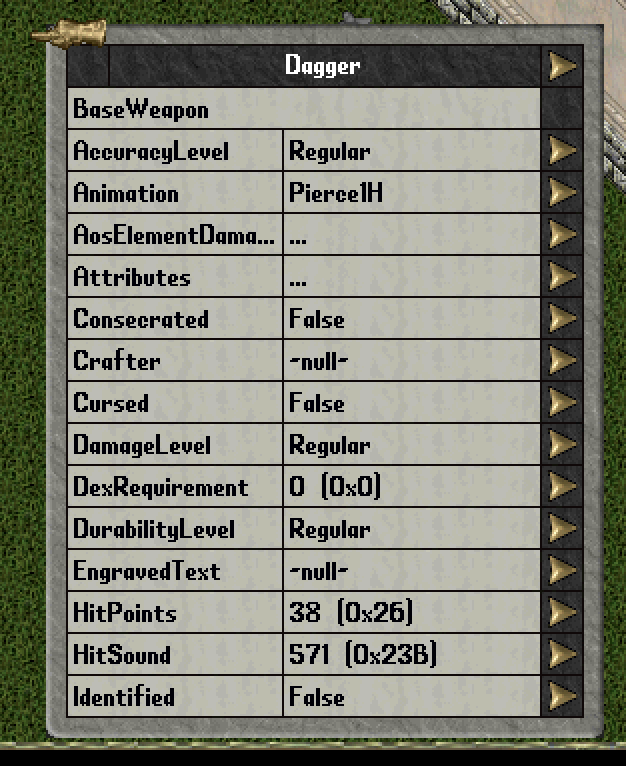
- [X] Adds a property to `CommandProperty` to allow modifying `PropertyObject` where there is no property setter that is accessible.
- [X] Updates AosAttributes and friends

Example of how to make this work:
```cs
        [CommandProperty(AccessLevel.GameMaster, canModify: true)]
        public AosWeaponAttributes WeaponAttributes { get; private set; }
```

This fix is necessary because in release mode the optimizer will sometimes _entirely remove the setter_ because it knows it can do something that is more efficient _when the property setter is private_. RunUO got around this by declaring a public setter explicitly that _was empty_.

### Screenshot
<img width="313" alt="Screen Shot 2021-05-15 at 11 34 01 PM" src="https://user-images.githubusercontent.com/3953314/118387955-49293c00-b5d6-11eb-8f31-a3b5e31bd18b.png">
- [X] Caches DateTime.NowUtc on the game loop (not other threads)
- [X] Replaces all locations where it makes sense
- [X] Adds Min/Max for `IComparable` (TimeSpan, DateTimes, etc)
Closes#261
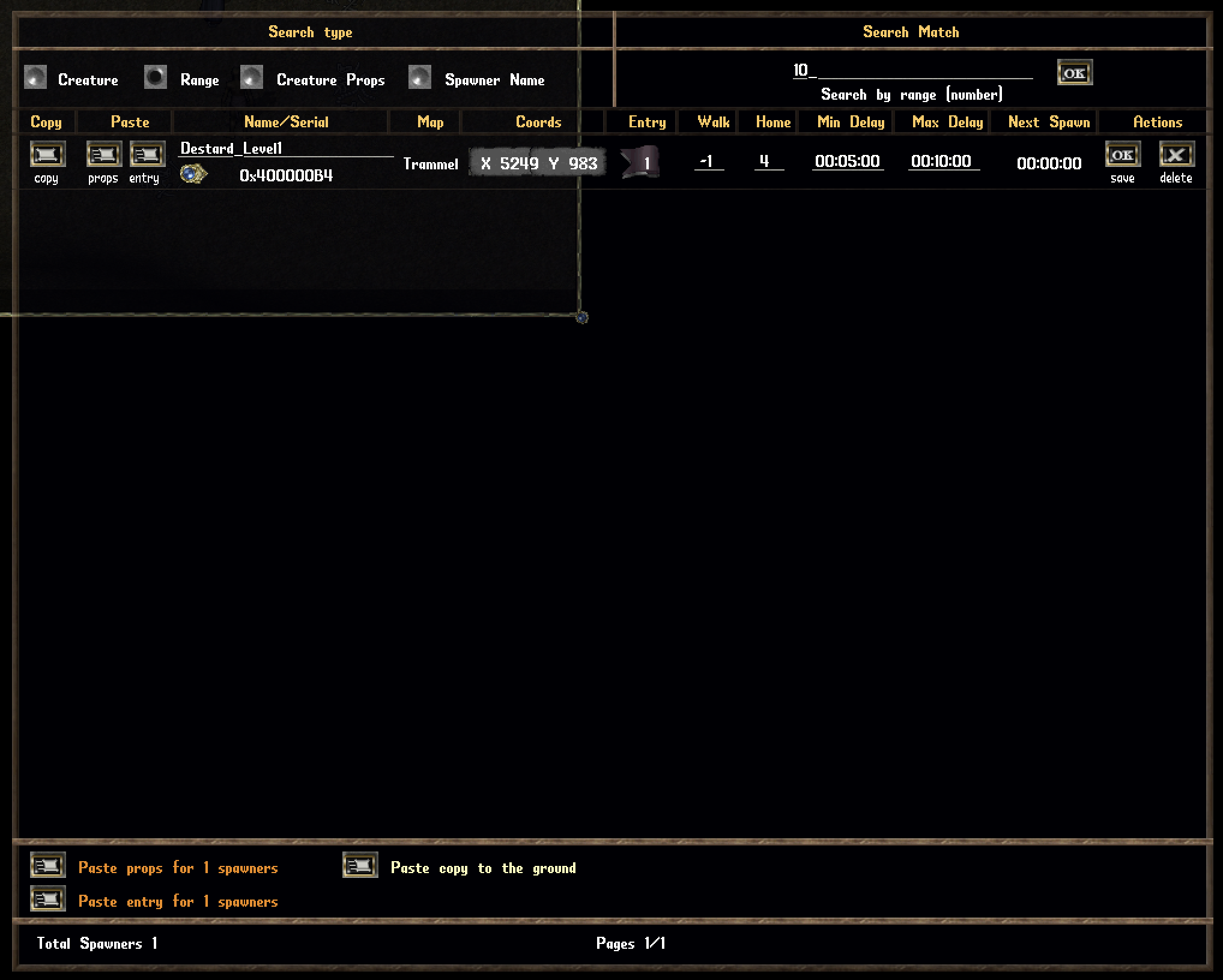
- [X] Adds `Respawn` command
- [X] Adds `EditSpawner` command
- Usage: `[global editspawner <type> <arguments> set <properties>`
- This command replaces the arguments (optional) and properties of the affected spawners for that type
- [X] Adds `SpawnProps` command
- Usage: `[area spawnprops`
- This command brings up a gump to modify targeted spawners based on the targeted entity.
- To do this, the props/values are copied and then used to construct a properties list for the spawner entry.
Closes#531
- [X] Removes network pause/resume
- [X] Adds back packet profiler
- [X] Adds state machine to keep track and trace netstates
- [X] Changes NetState.Running back to using an interlock exchange
- [X] Adds preliminary packet throttling support


### Packet Throttling
- `[GetThrottle <packetId>` to get the delay in milliseconds for that packet
- `[SetThrottle <packetId> <delay>` to set the delay in milliseconds for that packet
The settings are saved to `Configuration/throttles.json`
- [X] Cleans up gump packets
- [X] Adds event loop task synchronization
- [X] Moves timer pause and cleans up the delay task timer class
- [X] Cleans up the conserve cpu
- [X] Renames variables to make them consistent with the new style
- [X] Removes process delta recursion checking.
- [X] Properly diposes net states. This fixes edge cases that may cause hanging connections to stay open longer than they should.
- [X] Fixes an issue with gump items not compiling properly

Users can now utilize `Timer.Pause()` since the code will be executed on the proper thread.

```cs
public void async void Talk()
{
    _canTalk = false;
    await Timer.Pause(Utility.RandomMinMax(5000, 8000)); // Talk after 5-8 seconds
    DoTalk();
    await Timer.Pause(Utility.RandomMinMax(12000, 25000)); // Reset ability to talk after 12-25 seconds
    _canTalk = true;
}
```
- [X] Removes some uses of linq
- [X] Creates struct based enumerator for Skills
- [X] Creates a struct based enumerator for TypeCache
- [X] Changes HarvestDefinition to an init array instead of List
- [X] Changes HeritageTokenGump Response from List to Array