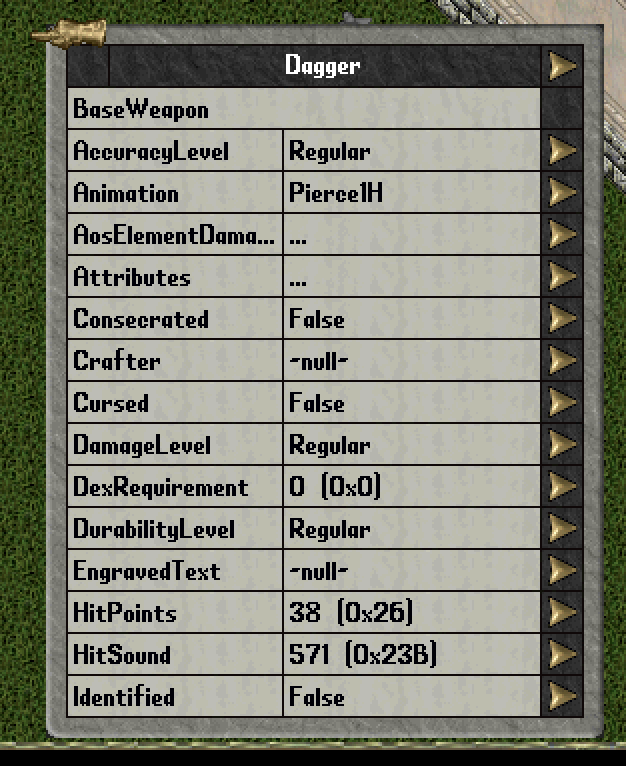
## Summary

Adopts ModernUO.Serialization 4.0.0 across the engine. Three commits, reviewable independently:

1. **Package + tool bump to 4.0.0** (`Server.csproj`, `UOContent.csproj`, `dotnet-tools.json`).
2. **Timers → `[DeserializeTimer]`** — the 8 drifting timers (BaseLight, TreasureMapChest, MarkContainer, FillableContainer, DeathRobe, DecayedCorpse, Corpse, BaseEscortable) now store their next tick as **anchored time**: server downtime no longer consumes the remaining delay, and idle-world saves are byte-stable. This changes their wire format, so each class bumps its serialization version with a `MigrateFrom` that replays the old delta-time read through the migration schema (the new `vN.json` files carry `@AnchoredTimer`; the old ones keep `@TimerDrift`, which the generator reads forever). The 2 wall-clock timers (Aquarium, FountainOfLife) keep their exact format via `wallClock: true` — no bump. Restart methods drop their `TimeSpan.MinValue` sentinel checks: v4 invokes them **only when a timer was actually running at save**.
3. **Linkage → field-side declarations** — 175 conversions across 25 files: `[SerializableFieldSaveFlag(order)]`/`[SerializableFieldDefault(order)]` become `[SaveFlag(nameof(...), nameof(...))]` on the field, and `[SerializableFieldChanged(order)]` becomes the `fieldChanged:` argument of `[SerializableField]`. **Wire-neutral: zero migration schemas changed.**

## Verification

- Solution builds with **0 errors, 0 warnings**; all three 4.0.0 packages verified indexed on nuget.org (no local feed needed).
- **835 + 708 tests green.**
- Generated output inspected: old-version content structs replay `ReadDeltaTime` (e.g. `V3Content.DecayTimerNext = reader.ReadDeltaTime()`), current versions write/read anchored time with the gated restart, and the wall-clock classes emit byte-identical `Write`/`ReadDateTime` framing.
- Schema tool run is committed (CI's `git diff --exit-code` schema check passes): exactly the 8 expected new `vN.json` files, nothing else touched.
- The conversion was scripted with a class-scoped resolver (order → same-class `[SerializableField(order)]`/`[SerializableProperty(order)]`); it planned 175/175 with zero ambiguities before applying.

## Notes

- New `MigrateFrom`s use the content structs' provided `XxxDelay` property, matching the pre-existing idiom in Corpse's and TreasureMapChest's older migrations.
- Follow-up candidate (separate PR, wire-neutral, any time): fold the ~150 eligible hand-written `[SerializableProperty]` setters (clamps, post-change side effects) down to `[SerializableField]` with `allowFieldChange`/`fieldChanged` hooks.
Follow-up to #2574, which added a `.Migrations.cs` partial to `BaseWeapon`. Pure relocation — no behaviour change.

## The inconsistency

`BaseArmor` and `BaseClothing` already kept their pre-codegen `Deserialize(reader, version)` in a `.Migrations.cs` partial, but left the `OldSaveFlag` enum and the `GetSaveFlag` helper behind in the main class file — even though every call site is in the partial:

| Class | `Deserialize` | `GetSaveFlag` / `OldSaveFlag` | Call sites outside the partial |
|---|---|---|---|
| `BaseArmor` | already in partial | in main file | 0 of 26 |
| `BaseClothing` | already in partial | in main file | 0 of 12 |
| `BaseWeapon` | in main file | in main file | — |

`BaseWeapon` had all three still inline, with its new `.Migrations.cs` holding only a `MigrateFrom`.

## After

All three follow the same layout: `MigrateFrom` newest to oldest, then the pre-codegen `Deserialize`, then `GetSaveFlag`, then `OldSaveFlag`. That moves ~290 lines of legacy read path out of `BaseWeapon.cs` — the file that needed it most at ~3,900 lines — and leaves the main class files describing only how the type behaves today.

## Reviewing this

The diff is large and almost entirely noise, so it is probably not worth reading line by line. Two checks are stronger:

- **Nothing was lost or altered.** Across each `.cs` / `.Migrations.cs` pair, the multiset of non-blank source lines is identical to `main` except for one added comment (below). The relocation was done mechanically and asserted against that invariant rather than by hand.
- **Nothing about serialization moved with the code.** Running `ModernUOSchemaGenerator` after the move emits no new migration files.

The complete set of intentional additions:

- `using System;` in each of the three partials, for the `[Flags]` attribute (implicit usings are not enabled here).
- `// Version 9 (pre-codegen)` above `BaseWeapon`'s moved `Deserialize`, matching the marker `BaseArmor` and `BaseClothing` already carry. Version 9 is correct because `BaseWeapon.v10.json` is its earliest migration schema, so codegen began at 10.

Everything else is blank-line placement.

## Verification

Full solution builds in Release with 0 errors and 0 warnings; 1516 tests pass (815 `Server.Tests`, 701 `UOContent.Tests`).
Follow-up to #2573. That change made `SmallBOD.EndCombine` require a player-crafted item, but it could only read provenance off `BaseArmor`, `BaseWeapon` and `BaseClothing`, because those are the only three classes that track it — hence the hand-enumerated `armor?.PlayerConstructed ?? clothing?.PlayerConstructed ?? weapon?.PlayerConstructed ?? false`.

The gap is structural rather than cosmetic. `PlayerConstructed` is set inside each base's `OnCraft`, so it can only ever reach types implementing `ICraftable`. Most craftables do not — the tinkering catalogue alone is largely plain `Item` subclasses — so any rule keyed on "was this actually crafted" has nothing to key on for those types.

## What changed

Provenance moves to `Item` and is stamped centrally in `CraftItem`, immediately after the item is constructed and before the `ICraftable` dispatch, covering both the AOS and T2A craft paths. The three `OnCraft` overrides drop their now-redundant assignment and inherit `Item`'s property, so no call site outside them changes — `Resmelt` and `SalvageBag` still read `armor.PlayerConstructed` and still compile unchanged. `SmallBOD`'s three-way null-coalescing chain collapses to `item.PlayerConstructed`.

`OnCraft` is only ever invoked from `CraftItem` (the other three call sites are `base.OnCraft` chaining), so removing those assignments has no other reachable effect.

## Storage cost: none

`Item`'s `SaveFlag` word is written as a fixed-width `int`, not an encoded one, so occupying bit `0x08000000` changes no record lengths. Items that are not player-constructed serialize byte for byte as before, and crafted ones differ by a single bit in a field already being written.

`Item` itself needs no version bump: a bare `SaveFlag` bit is self-describing, so records written before it existed lack it and read `false`.

## Version bumps

The three content classes do need one, since removing a serialized field changes their layout:

| Class | Version | Field removed |
|---|---|---|
| `BaseArmor` | 9 → 10 | 24 (was last, nothing renumbered) |
| `BaseClothing` | 7 → 8 | 7 (fields 8–10 shift down) |
| `BaseWeapon` | 10 → 11 | 26 (fields 27–30 shift down) |

Each gets a `MigrateFrom` for its previous version that assigns the old bool to the inherited property, so existing crafted armour, weapons and clothing keep their provenance across the upgrade. `Item.Deserialize` runs first and reads the absent bit as `false`, then the migration overwrites it — the generated `Deserialize` calls `base.Deserialize` before dispatching, so the ordering holds. `BaseWeapon` had no migrations file and gains one.

The renumbering is not stylistic: the generator requires contiguous field ordering and rejects a hole with `SG3005: Expected field 'Crafter' with order 7 but found 8`.

New schema JSONs (`BaseArmor.v10`, `BaseClothing.v8`, `BaseWeapon.v11`) are generated by `ModernUOSchemaGenerator` and committed alongside.

## One thing worth a second opinion

The new property is a plain auto-property on `Item`, so it does not call `this.MarkDirty()` the way the codegen setters it replaces did. `MarkDirty` is currently a no-op (`// TODO: Add dirty tracking back`) and no property in `Item.cs` calls it, so this matches the file as it stands — but it is worth noting if dirty tracking comes back.

## Verification

Full solution builds in Release with 0 errors and 0 warnings; 1516 tests pass (815 `Server.Tests`, 701 `UOContent.Tests`).
## Summary

Consolidates the duplicated inline AOS attribute → `ObjectPropertyList` emission that each item base copy-pastes into per-family `GetProperties(IPropertyList)` methods, mirroring the existing `AosSkillBonuses.GetProperties` precedent.

### Per-family `GetProperties(IPropertyList)`
- **`AosAttributes`** — the 24 common attributes in canonical cliloc-ascending order, with optional `damageBonus` / `hitChanceBonus` / `luckBonus` params so item-computed bonuses (e.g. `GetDamageBonus()`) stay out of the family type.
- **`AosWeaponAttributes`** — `UseBestSkill`, the `Hit*` block (1060416–1060430), `MageWeapon` (`30 - prop`), `SelfRepair`.
- **`AosArmorAttributes`** — `MageArmor`, `SelfRepair` (the always-direct members; `LowerStatReq`/`DurabilityBonus` stay inline since they're item-computed in armor but container-direct in clothing).

### Rewired all 6 `AosAttributes`-emitting item bases
`BaseJewel`, `BaseArmor`, `BaseClothing`, `BaseWeapon`, `BaseTalisman`, `Spellbook` now call the family methods instead of inlining the chain. Net: large dedup in `BaseWeapon`/`BaseArmor`/`BaseClothing`/`BaseTalisman`/`Spellbook`.

## Behavior change: tooltip line **order** (set preserved)

This is **not** a pure no-op refactor, and that's unavoidable. Today the families are emitted **interleaved in cliloc order**, and the relative order differs per item class — e.g. `BonusDex` (1060409) is emitted early in `BaseArmor` but **after** the `Hit*` block in `BaseWeapon`. No single emission order reproduces every class byte-for-byte, so consolidating into contiguous per-family blocks necessarily **de-interleaves**: lines regroup **specific → general** (family-specific, then common `AosAttributes`).

- The **set** of emitted `(cliloc, argument)` lines per item is preserved **exactly** — nothing dropped, added, or value-changed.
- Only the **order** of lines within a tooltip changes for `BaseArmor` / `BaseWeapon` / `BaseClothing`. `BaseJewel` / `BaseTalisman` / `Spellbook` were already canonical, so those are byte-identical.

## Tests
- **Golden set-invariance tests** per item base (`BaseArmor/Clothing/Jewel/Weapon/Talisman/Spellbook PropertiesTests`) — each was written to pass against current `main` **before** the rewire (locking the emitted-line set), then confirmed still passing after, proving no line is lost/added/changed.
- Family-level unit tests for each `GetProperties` (canonical order, computed-bonus folding, the `AosArmorAttributes` exclusions).
- `dotnet build` clean; full `UOContent.Tests` green. (Pre-existing `AccountPacket`/`GumpPacket`/`MobilePacket`/`ClientEnumerator` golden-test failures reproduce on unmodified `main` and are unrelated to this change.)
## Summary

### Changes
- Adds `[IgnoreDupe]` and `[SerializedIgnoreDupe]`
- Updates all _known_ classes that need the attribute. Some might be missing, please helps us find them!
- Adds `Item.Dupe()` command and encapsulates `CopyProperties` and `OnAfterDuped`. This is also overridable.
- Updates Dupe command to use the new logic.
- Fixes duping multiple kinds of objects that used to be outright broken.

### Bug Fixes
- Fixes issue with durability after duping
- Fixes issue with hue after duping

> [!Note]
> **Developer Note**
> Customizing how duping an item works now requires two steps:
> 1. Add `[IgnoreDupe]` or `[SerializedIgnoreDupe]` to the property/field
> 2. Add custom logic in an `OnAfterDuped` override
>
> When do you need to do this?
> *When the property being copied is not a primitive, and you need to manually deep-clone the contents of the property such as with Lists, Dictionaries, or sub classes.*
* Adds `SerializationProperty` - This will generate the private variable for serialization. Also provides an option `useField` to specify your own. Example:
  ```cs
  [SerializationProperty(0, useField: nameof(_resource)]
  ```
## Changes
- [X] Adds OPL convenience methods
    - `opl.Add(cliloc, value)` and `opl.Add(value)` - value as an integer or string works just like `opl.Add(cliloc, $"{value}")`
    - `opl.AddLocalized(cliloc, clilocValue)` - works the same as `opl.Add(cliloc, $"#{clilocValue}");`
- [X] Simplifies basic `list.Add()` situations
- [X] Changes cliloc as an argument so it works with custom IPropertyList implementations (HTML)
- [X] Fixes plants so they support the old localization and new (changed in 7.0.12.0+)
- [X] Exposes more methods to override for Item to make creating custom OPL possible.

## Important Notes
* Using a ternary as an argument, like this `opl.Add(number, showType ? $"{type}\t{value}" : $"{value}");` _will not use the correct string interpolation_. This means if you use a custom PropertyList (for HTML or some other purpose), the property list won't be localized properly.
* All localization values must be interpolated, even if they are literal strings, or integers. Example: `opl.Add(number, $"{"Charges"}\t{m_Charges}");` is correct. Using the following: `$"Charges\t{m_Charges}"` will not work for custom PropertyList implementations!
## Breaking Changes (New API)
ObjectPropertyList supports the following API:
```cs
list.Add(500000);
list.Add(500001, stringArgument);
list.Add("Some text");
list.Add($"Some text with {argument}");
list.Add(500002, $"{arg1}\t{arg2}");
```

## Notes
1. All API uses that require a formatter like this:
    ```cs
    list.Add(500002, "{0}\t{1}", arg1, arg2);
    ```
    Should be changed to use string interpolation, for example:
    ```cs
    list.Add(500002, $"{arg1}\t{arg2}");
    ```
2. The following paradigm should no longer be used:
    ```cs
    list.Add(1061170, prop.ToString()); // strength requirement ~1_val~
    ```
    The new string interpolation API will avoid having to convert the argument to a string before writing it to the packet. Instead use the following:
    ```cs
    list.Add(1061170, $"{prop}"); // strength requirement ~1_val~
    ```

### Benchmarks
```cs
|                         Method |     Mean |   Error |  StdDev |  Gen 0 | Allocated |
|------------------------------- |---------:|--------:|--------:|-------:|----------:|
|                BenchmarkOldOPL | 241.0 ns | 0.56 ns | 0.47 ns | 0.0105 |      88 B |
| BenchmarkStringInterpolatedOPL | 199.9 ns | 2.44 ns | 2.39 ns |      - |         - |
```

### Changes
- [X] Removes crash in STArray.Return when array is null.
- [X] Fixes NPE in OPL when entity is null. Serial in packet will be 0 when entity is null.
- [X] Fixes NPE in AosAttributes when Parent is null.
- [X] Changes OPL to use string interpolation.
- [X] Introduces `IPropertyList` to allow extending PropertyList for other uses.
* Now reads Prof.txt to get the professions
* The templated professions are based on profession `TrueName`
* Adds missing starting equipment
* Implements gargish starting equipment
* Consolidates some of the code
* Moves TC stuff to the TC file.
* Fixes some starting equipment that was wrong.

Note:
* Implementing the original T2A professions is possible on the client side, but requires moving the old clilocs to the current clilocs file. In the current file the entries are blank.
* Using the original LBR professions (they match AOS but without necromancy/chivalry) is kind of confusing because the profession indexes are ripped out of the UOTD/UOR ones and have non-sequential indexes. This will probably cause confusion and people will get no templated items when they select the wrong profession.
* Adds `RaceFlag` to the `Race` object. This is `1 << RaceIndex`
* Replaces `RequiredRace`  with `RequiredRaces` for items.
* Adds convenience flags for `RequiredRaces`
  ```cs

  public const int AllowAllRaces = 0x7;      // Race.Human.RaceFlag | Race.Elf.RaceFlag | Race.Gargoyle.RaceFlag
  public const int AllowHumanOrElves = 0x3;  // Race.Human.RaceFlag | Race.Elf.RaceFlag
  public const int AllowElvesOnly = 0x2;     // Race.Elf.RaceFlag
  public const int AllowGargoylesOnly = 0x4; // Race.Gargoyle.RaceFlag
  ```
* Example usage on an item:
  ```cs
  public override int RequiredRaces => Race.AllowHumanOrElves;
  ```
* Adds Wood and Stone armor material types
* Updates Woodland armor to Wood
* Adds proper messaging for race restrictions
* Adds gargoyle only for object properties
* Adds `CheckRace` functions for validating if a race or mobile can use the item:
  ```cs
  bool CheckRace(Race race);
  bool CheckRace(Mobile from, bool message = true);
  ```
* Adds save flag support (see `ElvenGlasses` for an example)
* Updates AOSAttributes so they are code genned
* Fixes embedded object support by adding an `IRawSerializable`
* Fixes various inconsistencies in serializing with codegen
- [X] Adds a property to `CommandProperty` to allow modifying `PropertyObject` where there is no property setter that is accessible.
- [X] Updates AosAttributes and friends

Example of how to make this work:
```cs
        [CommandProperty(AccessLevel.GameMaster, canModify: true)]
        public AosWeaponAttributes WeaponAttributes { get; private set; }
```

This fix is necessary because in release mode the optimizer will sometimes _entirely remove the setter_ because it knows it can do something that is more efficient _when the property setter is private_. RunUO got around this by declaring a public setter explicitly that _was empty_.

### Screenshot
<img width="313" alt="Screen Shot 2021-05-15 at 11 34 01 PM" src="https://user-images.githubusercontent.com/3953314/118387955-49293c00-b5d6-11eb-8f31-a3b5e31bd18b.png">
- [X] Fixes an issue where a buffer smaller than 8 bytes would not double with enough space in some cases.
- [X] Fixes an issue with dupe copying the savebuffer reference (ugh).
- [X] Streamlines the IGenericWriter API to use better generics.
- [X] Streamlines the IGenericReader API to use better generics.
- [X] Forces `tidying` of a List/HashSet to be done externally since Writers/Readers should not have side effects.
- [X] Fixes an issue where Tidying a list didn't TrimExcess, causing memory leaks.
- [X] Reverted the meaning of `World.Running` to specifically refer to any world state post world loading.
  - NOTE: Do not use this if you want to block on world saves. Instead use checks against `WorldState.Saving` states.
- [X] Fixes an issue with serializing negative DateTime deltas.
- [X] Fixes a potential issue with serializing non-UTC DateTime.

Bumps release version
### API Breaking Change
Combined `AsciiMessage` and `UnicodeMessage` into a single function that takes two arguments, `bool ascii` and `string lang`. Lang can be null (or anything) if ascii is true.

- [X] Changes message packets
- [X] Cleans up some code
- [X] Uses benchmarks to determine if the spanwriter + copyfrom
### Change to how DisplayEquipInfo works
* Fixes a bug where raw name wasn't used
* Fixes another bug where an empty, blank, or null string was still sending an empty crafted by property.

Bumps release version